Company took two years to validate the methodology and technologies that guarantee a radical innovation of its kind
An algorithm powered by biomechanical measurements, capable of detecting signals that identify a risk of injury: this is not science fiction, it is a project developed by Machine Learning In Athletics, a company born in 2021 informally from a meeting between its three founders. Explaining the innovative project is Pierluigi Bongiorno, CEO and co-founder.
What does it aim for and how did your system develop?
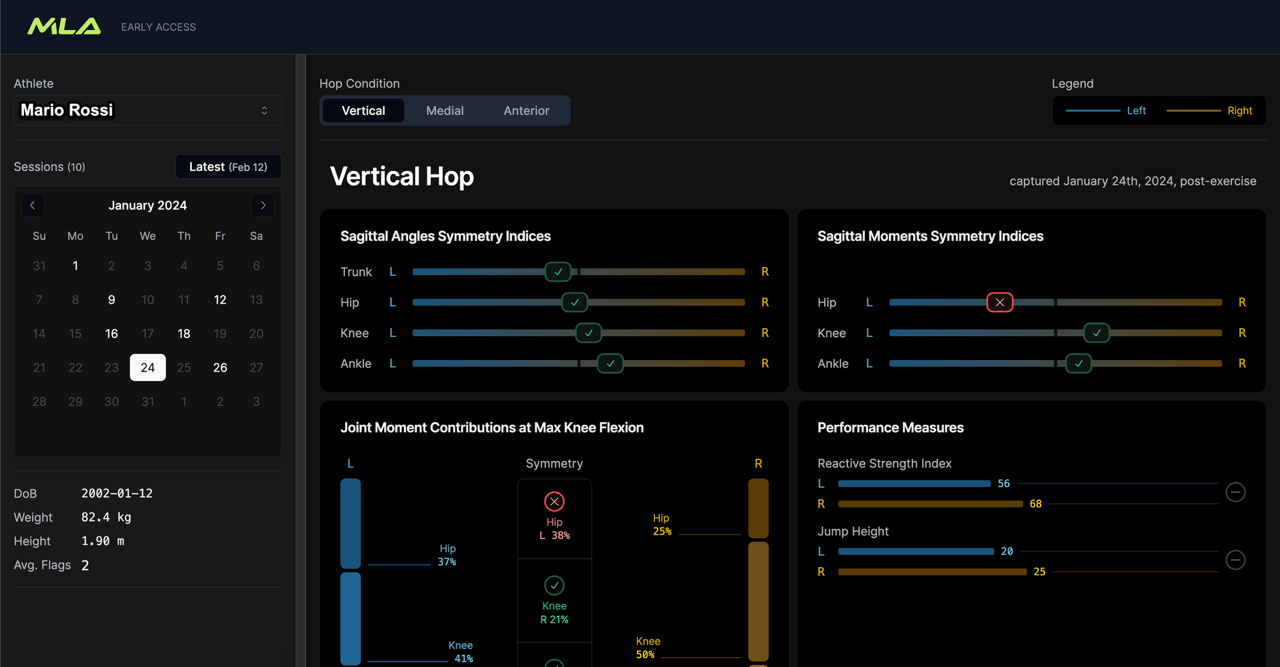
«The goal is to identify risk factors related to injury before it occurs. The solution is based on scientifically sound assumptions and a methodology verified by the Department of Sports Medicine at the University of Salford Manchester. With the addition of the fourth partner, an expert in biomechanics of movement, we have broadened the knowledge base and refined the methodology. We completed an initial fundraiser and funded a measurement laboratory at the Genoa CFC headquarters. With the support of the athletes and the organization we are generating a database that will allow us to “train” the Machine Learning algorithm in order to predict when the necessary conditions leading to injury are occurring – in order to prevent it from happening, of course».
What does your methodology consist of?
«The methodology is based on the fact that each of us, on an individual level, has a specific way of moving in space. The ability to map and monitor this biomechanical normality over time gives the ability to highlight any abnormalities that we know are scientifically linked to injury risk. This algorithm needs to learn from a large amount of data that must be accurate and consistent with each other. The fact that we chose a top soccer team is because professional athletes train every day, and on this daily basis we can build a wealth of data with which to train the algorithm. We expect that in no more than a year the algorithm will move to step two, that is, it will have learned what the injury-related events are and be able to anticipate them with great accuracy. At this point we could predict injuries even with measurements taken less frequently».
Machine Learning In Athletics thus offers an extremely innovative methodology, the potential of which is linked to the size of the population segments it will cover: other professional sports besides soccer and other segments of populations where measurements may not be made on a daily basis, for example, the world of the elderly, amateur athletes and workers with strenuous tasks.